Estimated reading time: 5 minutes
Deciding to become a foster parent is no easy decision. It’s one that is intentionally thought out, prayed through, and full of questions. How will this impact my family? Can I really do this on my own? What if I get too attached? I don’t have the time or money. These are honest concerns. We invite you to hear a different perspective, and hear from people in the foster care community about what fostering has taught them through four common doubts or questions.
1. “I’m anxious that bringing children with trauma into my home will impact my own children’s lives.”
As a parent, everything you do is filtered through one question: Is this best for my kids? It’s natural to wonder how welcoming a child who has faced deep pain and instability might shift the dynamic of your family, from the rhythms and the relationships, to the peace you’ve worked hard to build. Or, maybe your children are nearly grown, lives full of friends, sports, and after-school commitments, and you can’t quite picture where a younger child would fit into all of that.
These are not small concerns, they’re the mark of a thoughtful, loving parent. Research shows that foster and adoptive families are more than twice as likely to say they’re flourishing compared to other families (CAFO, 2025). They’re doing some of the hardest, most meaningful work, and it’s shaping them.
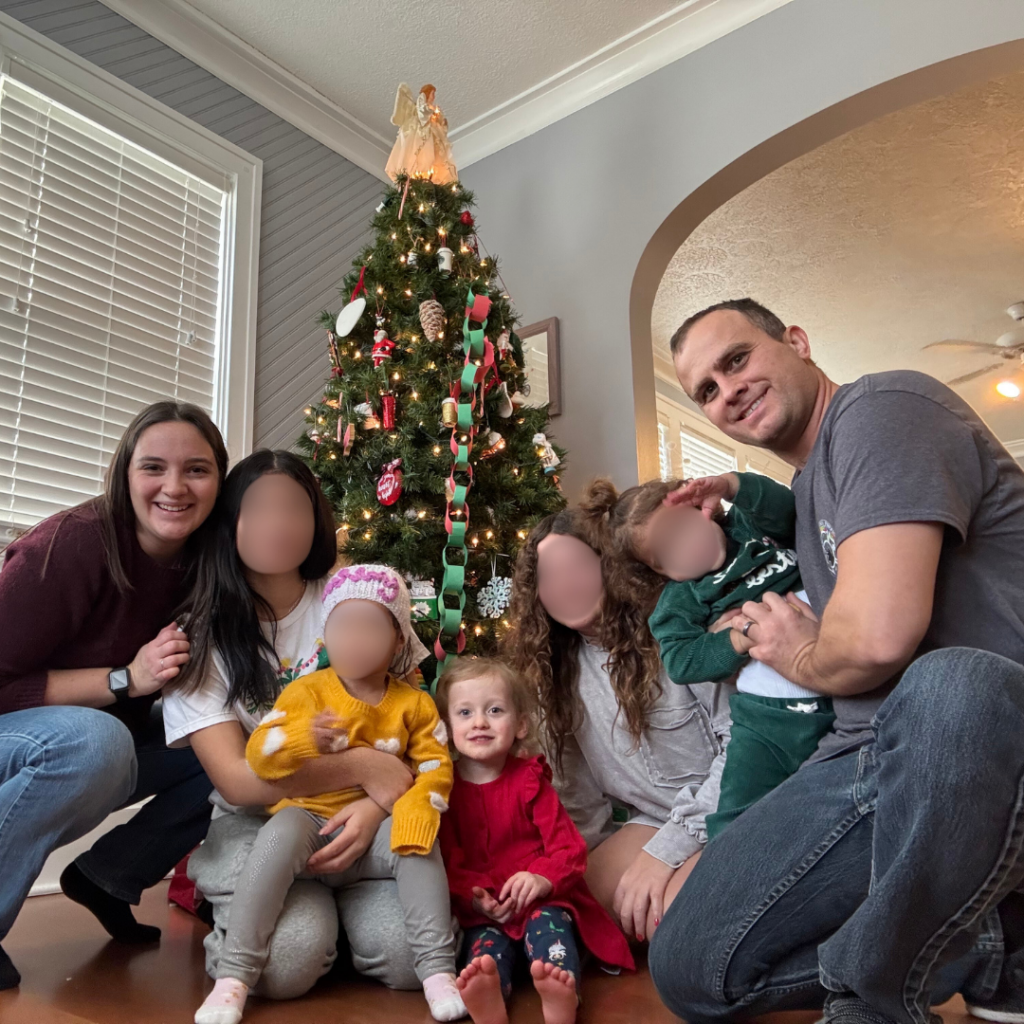
Fostering can teach your children lessons beyond a classroom: empathy, resilience, and the profound belief that we are called to take care of God’s people and live in community with one another. The Farrands have seen it firsthand, friendships and sibling-like bonds formed between their child and the children they’ve welcomed home.
“Madeline loves her big and little sisters! Our girls have all been so close and have remained that way even after leaving our home. We were a little nervous about how it would work having older kids with our little one, but watching them connect and bond has been a huge blessing.”
–Todd & Jane Farrand, Foster Parents
2. “I’m a single parent, – I can’t foster”.
Some of the most devoted foster parents we know are doing it solo. The truth is, there is no perfect family portrait that qualifies you to foster. What matters most is the love, stability, and commitment you choose to bring through the door every single day, even on the hardest days. Marital status has never determined someone’s capacity to change a child’s life.
We’ve watched single foster parents do extraordinary things. We’ve seen a child learn to trust again in the home of someone who shows up for them wholeheartedly. If you feel the pull to open your home, that call on your heart matters.
“I have a young man in my home who has been homeless for almost a year. He’ll be 18 next month….he’s been pretty much on his own since he was 12…since he’s been at my house, he’s gotten nine credits, he’s in a work program, he’s doing everything he can to turn his life around. Over Christmas, he said to me, ‘you know if I live to see 18, it’ll be because you believed in me.’ And I told him ‘No – WHEN you live to see 18, it’ll be because you started believing in yourself’. We have a lot of youth out there that don’t have that one person to believe in them”.
–Tiffany McKnatt, Foster Parent
3. “What if I get too attached?”
Can we let you in on a little secret? That worry–the one sitting heavy in your chest right now–might be the very thing that makes you an incredible foster parent.
The worry that you’ll love too much, grieve too deeply, or struggle to say goodbye is not a warning sign, and rather a signal of the kind of heart these children need. As a foster parent, many of the children who walk through your door may have never experienced a love so steady and fierce that the thought of losing it would hurt.
Yes, there are hard goodbyes. Foster care asks you to hold on wholeheartedly while remaining open-handed, and that tension is real. Some of our foster parents describe reunification days as some of the hardest and most meaningful days of their lives. But here’s what stays long after a child returns home: you. The stability provided, meals around your table, the voice that told them they were brave and worthy of love. Through your open door, they experienced the tangible, unconditional love of Jesus, and that doesn’t disappear when they walk out the door. It goes with them, shapes who they become, and plants a seed that can last a lifetime. In loving them well while they’re in your home, you’re pointing them to a love that is greater still when they leave.
“I’m really thankful that our family’s goal is that people would see Jesus when they come to our house. Because we can’t go with them. You know we can’t go with them to keep them safe. But He can.”
–Kathryn Dean, Josiah White’s Foster Parent
4. “I’m concerned that I don’t have the time or money”.
In a fast-paced world, life is full — and it feels like it. Between work, family, and everyday commitments, adding anything else can feel impossible, let alone opening your home to a child who needs consistent, attentive care. And finances? The thought of stretching an already busy life and budget can feel like an immediate roadblock.
So let’s talk about it honestly — because we don’t want either of those things to be the reason you say no.
You don’t have to do this alone.
The same village it takes to raise your own children is the same village that makes foster care possible. Respite providers who step in when you need a breath. Friends who show up with dinner. Church communities that rally around families in hard seasons with meals, prayer, encouragement, and practical, roll-up-your-sleeves help. This kind of support has always been the heartbeat of community, and foster families get to receive it too.
As Rachel Reames, our Indianapolis Foster Care Advocate put it:
“Church communities have always been known for the way we gather around families in hard seasons. For generations, churches have shown up with meals, prayer, encouragement, and practical help. We step in for others when life feels overwhelming. Offering wraparound support to foster families is simply a natural extension of this kind of care. Fostering is not a solo journey; it involves the whole community. Much like our Christian faith, it was never meant to be lived out alone, but alongside others who share both the responsibility and the hope. When we surround foster families with steady, tangible love, we are a community that carries burdens together. We were always meant to be in community with one another. Everyone can play a part in helping children and families thrive.”
And when it comes to finances, foster care comes with real, tangible support. Monthly subsidies help cover a child’s daily needs, and foster children receive Medicaid, meaning their medical care is provided for. Between agency support, church communities, and care networks, we help you find wrap-around support through this journey.
Every foster parent has started in the same place you might be right now: full of questions and doubts, wondering if they had enough to give. Fostering will stretch you in ways you could not imagine — your faith, your family, your heart. But that’s the thing about being stretched: it doesn’t leave you the same. We believe that a call on your heart is worth answering, and we would be honored to walk that journey alongside you.
If you have questions or would like more information on becoming a Josiah White’s Foster Parent, please inquire at: josiahwhites.org/foster-a-child
Source: Christian Alliance for Orphans (CAFO). (2025). Engagement in US Foster Care and Adoption 2025 Data and Trends. McLean. cafo.org/foster-care-report/