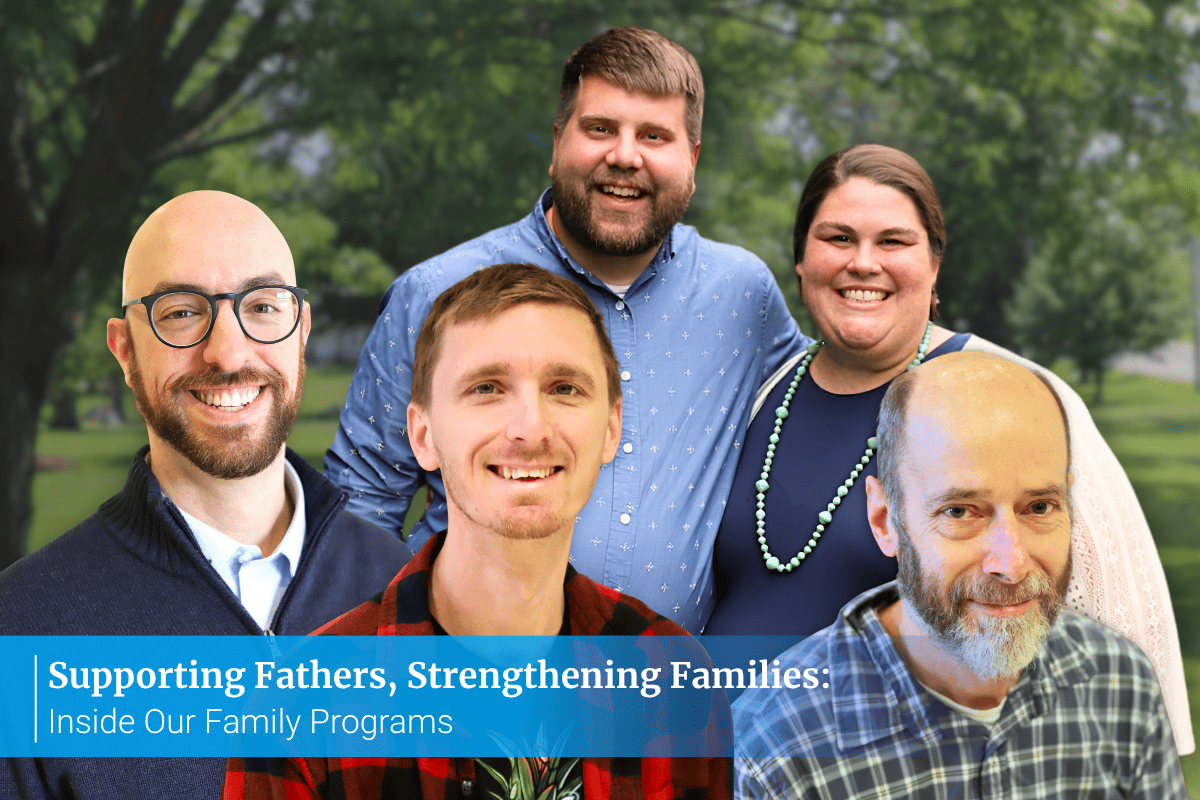
Father’s Day is a time of celebration for many families. For others, including some of the children, teens, and families we walk alongside, it can be a reminder of what is missing.
The reality is clear. Father absence is one of the most consistent factors linked to academic struggles, emotional pain, and long‑term instability in a young person’s life. Yet, every statistic about father absence also points to something powerful:
A present, steady, loving father/male role model can change the entire direction of a child’s life. And when communities surround dads with support, hope grows.
A Reality Check: What A Missing Father Really Means
The numbers help us understand what many families are carrying.
- 1 in 4 U.S. children — more than 18 million — live without a father in the home.
- 71% of students who don’t finish high school grew up without a father present.
- Teens without fathers face significantly higher risks of behavioral disorders, substance use, aggression, and emotional struggles.
These numbers represent real situations for communities. They reflect the lived experiences of families in our classrooms, churches, workplaces, and neighborhoods.
But statistics do not get the final word.
Where Hope Begins: Perspectives on Supporting Fathers at Josiah White’s
At Josiah White’s, we actively seek to support the needs of fathers and youth every day. Our role is to support families, empower fathers, and create spaces where they can find the support needed to stand strong. That work happens through our programs: Foster Care, Community-Based Services, and Residential.
Foster Care Program
In foster care, the presence of a patient, trustworthy father figure can become a turning point in a child’s healing story.
Kathryn Dean, a Foster Parent, shares her experience:
“For a lot of our long-term placements, Christopher (Kathryn’s husband) is the first man that they lived with. I just believe that God is going to use that. You know, being able to live with a man who loves Jesus and loves them, pushes them to be better to strengthen themselves. We need strong families and we need strong men to be foster dads.”
Father Engagement Program
Supporting fathers begins with a relationship; the kind that invites honesty, growth, and the courage to step into their child’s story with humility.
Steve Hill, a Family Specialist, shares his thoughts:
“Fathers do not necessarily seek out support, but they are willing to accept it if the opportunity presents itself.
In my humble opinion, relationships are the most important aspect in life. Helping others starts with yourself. One has to be honest about who they are and why they function the way they do. Once an individual is honest about their own weaknesses and strengths, they “can” be better equipped to help others. To be effective, one has to see beyond the life they live.
At the end of the day, it is about having the right relationship with God through Jesus Christ.“
Family Preservation
Keeping families whole means equipping, encouraging, and involving fathers so they have the tools to stay present, even through life’s hardest storms.
Brent Kirby, a Family Preservation Therapist, describes this work:
“First, Josiah White’s staff seek to engage fathers in services in many different ways. Family Preservation, for instance, is about treating the entire household. Second, staff work to include fathers in text messages. Staff create text groups between themselves, the mother AND the father. This is an indirect way we tell fathers, “You are important. Third, staff address fathers when they enter a home. When a father is present, possibly for the first time during a visit, it is vital that staff introduce themselves, hold eye contact, extend a hand, and show respect to the father.
When we as staff show them respect, they may experience something not received…possibly ever in life! In this way, we, as Josiah White’s staff, model to fathers and their families what is so important. When the fathers feel respected, they engage.”
Residential Programming
For many youth, the consequences of father absence run deep. But beyond the statistics lies a deeper truth. Healing begins when consistent, safe men point them toward a love that will not leave.
Thomas Wood, an Independent Living/Aftercare Coordinator, shares:
“While it is a sad reality that too many kids grow up without a dad in the home, it is also a reality that they have a Heavenly Father who cares for them unconditionally, infinitely, and eternally.
Whether our interactions with these kids are momentary laughter or a hard conversation, if they feel the love of our Father, we have done our job.”
This is not only true in residential care; it is true everywhere.
When steady, compassionate men show up and reflect the love of Christ in homes, classrooms, churches, and communities, something changes. Trust begins to grow, hope takes root, and healing finds room to happen.
Through their consistency, patience, and presence, they remind children and families that they are seen, valued, and never alone.
To all the fathers, foster fathers, father figures, mentors, and men who show up with love and steadiness, Happy Father’s Day.